
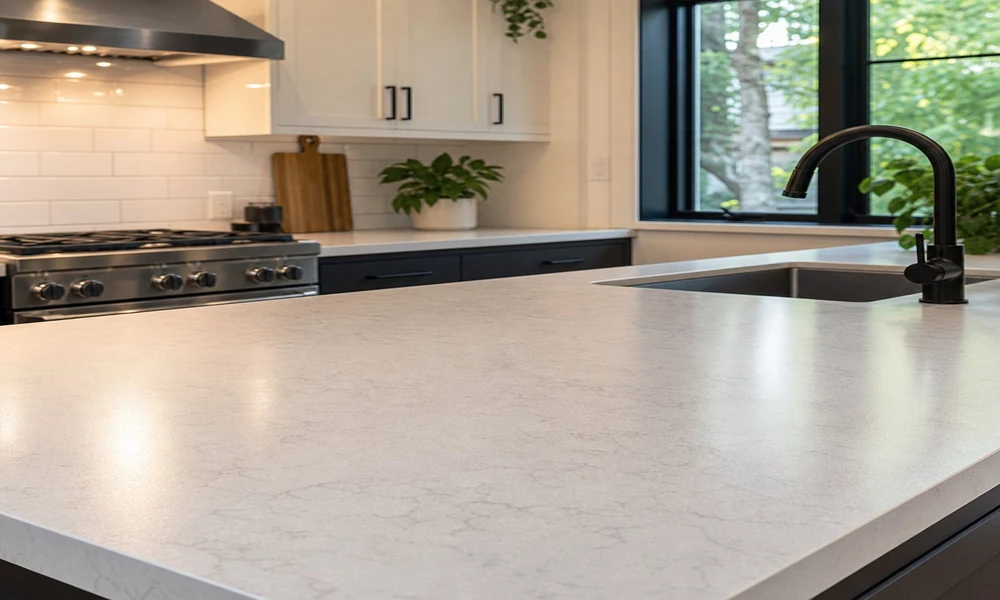
Your kitchen countertops have probably been the hardest-working area in your home. Between everyday food prep, accidental spills, hot pans landing right from the stove, and endless cleaning cycles, the surface takes a lot of wear and tear. Over time, even high-quality countertops can start to show their age, with scratches, deep stains, a lackluster shine, or a style that doesn’t match your tastes anymore. If you’re tired of the look of your counters and are curious about kitchen countertop refinishing in Portland OR, you are not alone. Refinishing is a smart alternative for many who don’t want to replace the counters.
The process makes an older counter look cleaner, more modern, and can add a few more years to its lifespan. However, it’s important to understand what it is, when the process is a good option, and how to maintain it once it’s done.
What Kitchen Countertop Refinishing Is
Refinishing a countertop is essentially resurfacing the old counter without pulling it down to replace it. The existing counter gets thoroughly cleaned, repaired as needed, primed, coated, sealed and finished to make it look like new.
Depending on the type and condition of your existing countertop, the process might work on laminated counters, tile, stone and some other types of counter surfaces. Generally, the counter needs to be in place and structurally sound but just not look its best anymore. Refinishing countertops should not be confused with painting, which may or may not last, or with applying an actual coat of finish. For refinishing countertops to be long-lasting and durable, there has to be the right surface preparation and bonding, appropriate finishes used, and the required time allowed for curing.
Why Homeowners Refinish Counters
Countless kitchens in Portland OR have dated countertops, which are usually from when the home was built, or the owners haven’t had the resources or desire to remodel the cabinets and replace the counters since buying the home. Replacing the countertops can require more work with the sink (get more info), plumbing, backsplash, cabinets, and walls.
Many Portland homeowners decide to go ahead and refinish because they see advantages in:
- less disruption, less mess than replacing countertops
- the process of replacing countertops is more time consuming
- lower overall cost than replacing countertops
- more variety of color and finish
- less wasted materials and trash
For homeowners who aren’t planning to replace or remodel in the near future, refinishing counters can be a smart interim fix. For homeowners who are preparing the house to sell, countertop refinishing can make the kitchen look better without turning the kitchen into a huge renovation project.
Which Countertops Are Good Refinishing Candidates?
Countertops aren’t always good candidates for refinishing, but many worn, tired counters are. If the counter is level and stable and doesn’t have major underlying damage, the counters are good candidates for countertop refinishing.
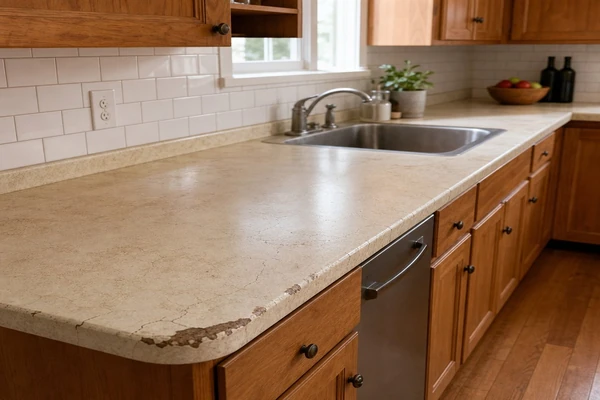
There are many counters that could use countertop refinishing, including fading or discoloration, light scratches, dull appearance, stains, small chips and outdated patterns. Older laminated and tile counters might be good candidates if the base is in good shape and isn’t damaged.
If the counters are swollen, have water or structural damage, sections are loose, there are large cracks or large deterioration under the surface, countertop replacement is a better choice. Countertop refinishing will fix the surface, but not what is underneath it.
Typical Countertop Refinishing Process
A proper countertop refinishing project requires some initial inspection to assess the condition of the existing countertop. Once this is complete, proper cleaning and repairs must take place before a new coat of finish is applied to the counter.
The following steps are typical in a countertop refinishing project:
- cleaning and degreasing the counter
- repairing minor chips and cracks
- sanding or etching for adhesion
- masking off cabinets, walls, sink, stove, dishwasher and appliances near the counters
- application of bonding agents and finish
- sealing and cleaning the countertop
- allowing time for the counter to cure
Proper preparation is essential in countertop refinishing. If the surface is not properly cleaned, the final refinishing may be less effective.
Choosing a Countertop Finish for Your Kitchen
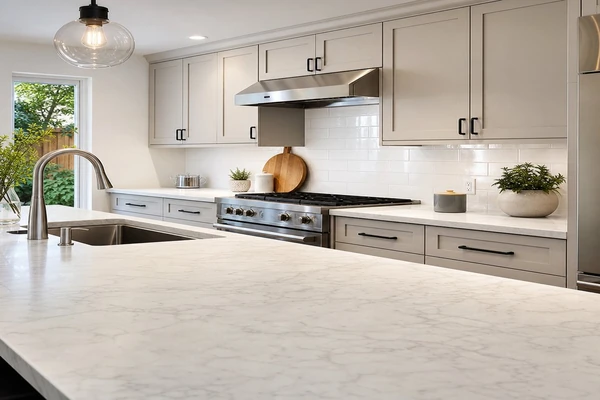
Refinishing your countertops gives you a chance to update the overall kitchen style without a full remodel, replacing cabinetry and walls. You can take a counter that looks tired and make it new, giving yourself a more neutral look, a more stone-like or natural finish, or a more subdued and refined appearance.
In Portland, OR, home practicality is often best. A light countertop finish will give your kitchen brightness and depth. A darker finish on your countertops will create depth and color against white or light-colored cabinetry. A satin or matte finish will soften the look of older kitchen areas.
Maintaining Your New Kitchen Countertops
Clean spills right away. Be mindful, especially of acidic spills such as citrus juices – you can read more at naturalstoneinstitute.org, wine, or vinegar. Clean your new countertop surfaces with a cleaning product that is not harsh or abrasive. Follow the recommended time needed for curing after the project is completed even when the countertop surface has already dried.
An Updated Countertop Look Without Countertop Replacement
With proper preparation, the right countertop finish, and appropriate maintenance, your home and your kitchen can be beautiful and have counters that look new and modern.