
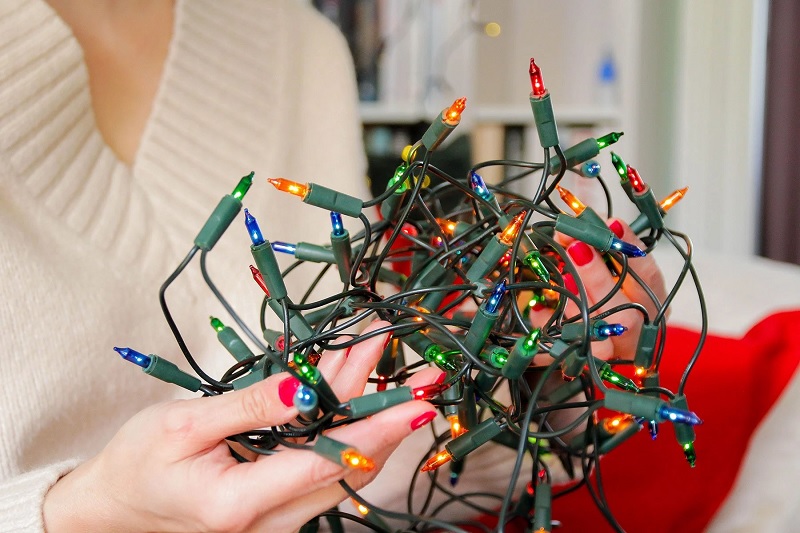
There’s a special kind of betrayal that happens when you plug in your Christmas lights and nothing happens.
You’ve spent the better part of an hour pinning them onto the tree, untangling knots that defy physics, and arranging them just so. And now? Darkness. Not even a flicker of festive cheer.
Before you bin the lot and storm off to the shops, take a breath. Most lighting failures are surprisingly fixable, and you don’t need an engineering degree to sort them out. Here’s how.
Check Your Power Source
It seems obvious, and you’ve probably already checked. Still, this simple test solves the problem more often than most people realise.
Plug something else into the outlet—your phone charger, a lamp, literally anything that works. If it springs to life, the outlet is fine. If not, you’ve found your culprit, and it’s probably a tripped breaker or a dodgy socket that needs attention.
Next, check the plug itself. Give it a gentle wiggle whilst it’s in the socket. If the lights flicker on, you’ve got a loose connection. Unplug everything, inspect the prongs for any damage or corrosion, and give them a wipe with a dry cloth if they look grimy.
Sometimes the issue is laughably simple. It could be that the plug isn’t pushed in all the way, or there’s a layer of dust preventing proper contact.
If the lights still refuse to cooperate, try a different outlet entirely. You might have a dead socket on your hands, which is a problem for an electrician rather than a string of fairy lights.
This entire check takes about two minutes, and it’ll save you from dismantling perfectly good lights in a fit of unnecessary panic.
Hunt Down the Troublemaker Bulbs
Christmas lights are a bit like a chain: if one link fails, the whole thing can pack it in. This is especially true for older sets wired in series, where each bulb depends on the next.
Start at one end and work your way along, inspecting every single bulb. Look for obvious casualties, like blackened glass, broken filaments, or bulbs that are loose in their sockets.
Even a slightly wobbly bulb can disrupt the circuit, so give each one a gentle twist to make sure it’s seated properly.
If you spot a dead bulb, replace it immediately. Most light sets come with a few spares tucked into the box. Match the voltage exactly—mixing different types can lead to malfunctions.
Can’t find any obviously broken bulbs? Try the slightly tedious approach: remove one bulb at a time and replace it with a spare, then plug the lights in to see if they work.
This will probably be tedious, not to mention annoying, but it’s also remarkably effective at identifying the sneaky bulb that looks fine but isn’t.
Once you’ve found and replaced the culprit, the rest of the string should light up beautifully. If it doesn’t, try the following methods instead.
Investigate the Fuses Before You Give Up
Most people forget that Christmas lights have fuses, which is why they’re caught off guard when the problem turns out to be hiding in the plug all along.
Unplug the lights first—this is non-negotiable. Then locate the fuse compartment, which is usually tucked behind a small sliding door or panel on the plug itself. You might need a flathead screwdriver to coax it open if it’s being stubborn.
Inside, you’ll find one or two small fuses. Pull them out carefully and hold them up to the light. A blown fuse will have a broken wire inside or visible scorch marks on the glass. If it looks damaged, bin it.
Replace blown fuses with new ones of the exact same rating. The rating is printed on the side of the fuse. It’s usually 3A or 5A for Christmas lights. Using the wrong rating can create a fire hazard, so don’t guess.
Most decent light sets include spare fuses in the plug compartment or the packaging. If you’ve lost them, pick up replacements at any hardware shop. They’re cheap, and keeping a few spares on hand is wise.
Deal with Dodgy Wiring Before It Becomes Dangerous
Frayed or damaged wires create a serious fire risk, particularly when they run across a highly flammable tree.
Run your hands gently along the entire length of the light string, feeling for rough spots, exposed copper, or sections where the plastic coating has worn through. Pay extra attention to areas near the plug and where the wire bends sharply.
If you find minor damage, you can patch it temporarily with electrical tape. Wrap the tape tightly around the damaged section, covering it completely and extending a bit beyond the frayed area on both sides. This is a short-term fix, though. It’ll get you through the season, but don’t rely on it indefinitely.
For more serious damage—large sections of exposed wire, multiple frayed spots, or wires that feel hot to the touch—it’s time to retire the lights. No amount of tape will make them safe, and the risk simply isn’t worth it.
If you’re hiring a tree-moving service to move your tree, ask how do you fix Christmas tree lights if they’re damaged. Professionals often carry spare bulbs and fuses and give advice on how to fix them.
Damaged wires are worth taking seriously. Sort them out now, and you’ll sleep easier knowing your tree isn’t a fire hazard.
Know When It’s Time to Think About New Lights
Sometimes, despite your best efforts, the lights are simply done. They’ve had a good run, but all things must end.
If you’ve checked the power, replaced bulbs, swapped fuses, and taped up dodgy wiring, and the lights still won’t cooperate, it’s time to let them go. Continuing to fight with them will only sour your festive mood.
Modern LED lights are worth considering as replacements. They use a fraction of the energy, last significantly longer, and run cool enough that you don’t have to worry about them setting anything on fire.
They’re also less prone to the single-bulb-kills-everything problem that plagues older sets.
Battery-powered options are brilliant for areas where plugs are scarce or trailing cables would be a nuisance. Tuck them into wreaths, wind them around bannisters, or drape them anywhere that strikes your fancy.
If you’re feeling creative, fill glass jars with fairy lights for a cosy, rustic vibe. They make lovely table centrepieces and don’t require any technical skill whatsoever.
The point is to keep your home looking festive without making yourself miserable. Sometimes the best fix is simply starting fresh.
Conclusion
Now that you’re armed with these simple hacks, you can tackle most Christmas light failures without frustration or emergency shopping trips. Your tree will glow beautifully, your stress levels will remain manageable, and you can get back to the genuinely enjoyable bits of the season.
Now plug those lights in and bask in the twinkly magic. You’ve earned it.