
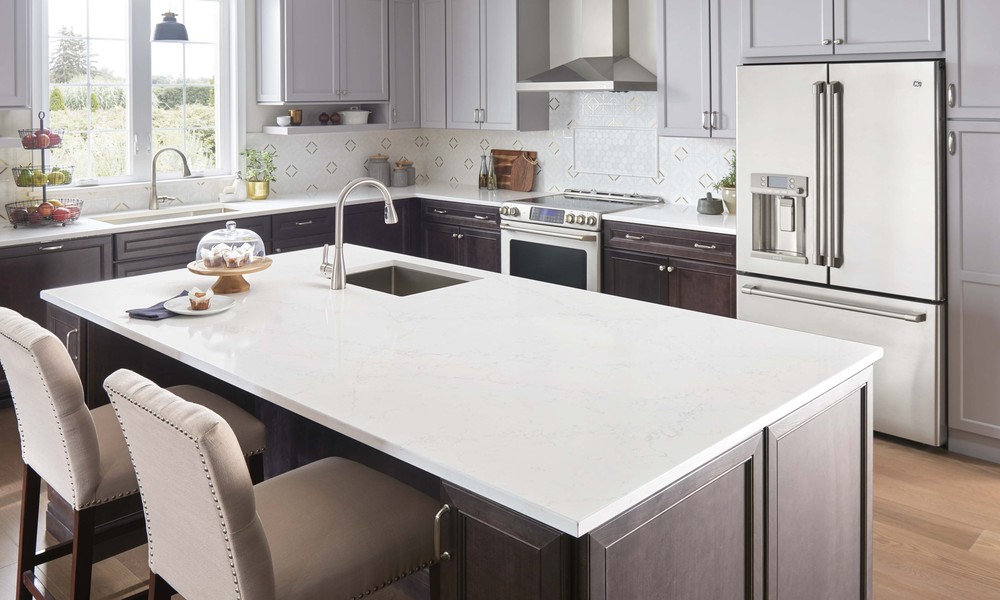
Solid surface worktops occupy a distinct and often underappreciated position in the kitchen worktop market. They are not as widely understood as laminate or natural stone, yet they offer a combination of practical performance characteristics that neither of those materials can fully replicate.
For homeowners specifying a kitchen and trying to navigate a market full of competing claims, understanding what solid surface actually is and what it genuinely delivers makes the decision considerably more straightforward.
What Solid Surface Worktops Are
Solid surface worktops are made from acrylic resin or a blend of acrylic and polyester, mixed with mineral fillers, throughout their full thickness. Unlike laminate worktops, which have a decorative surface layer bonded to a chipboard core, solid surface material is the same composition from top to bottom. This homogeneous construction is the source of most of the material’s practical advantages and is what distinguishes it from surface decorated alternatives.
Popular UK brands include Maia, Minerva, Mirostone, and Pietra, all of which offer a range of colours and effects from plain contemporary shades through to realistic stone and marble appearances. A comprehensive range of solid surface worktops from all principal brands is available through specialist UK suppliers, typically with sample ordering to confirm colour and finish before committing to a full order.
The Key Practical Advantages
Solid surface worktops offer several practical advantages that are difficult or impossible to replicate with other materials at a similar price point:
- Seamless joints: because joints are bonded and sanded flush, they are virtually invisible. Long worktop runs and complex layouts can be achieved without the visible seams that characterise laminate and stone installations.
- Non-porous surface: the material does not absorb liquids or harbour bacteria, making it one of the most hygienic worktop surfaces available and straightforward to keep clean with standard household products.
- Repairability: surface scratches and minor damage can be sanded out and buffed to restore the original finish. This is unique among common worktop materials and means the surface can be renewed rather than replaced when wear develops over time.
- Completely waterproof: with no chipboard core, the material will not swell or degrade around sinks or in consistently damp conditions.
- Integrated sinks: matching sink modules can be bonded seamlessly into the worktop, eliminating the gaps and joints around conventional sink installations.
Where Solid Surface Falls Short
Solid surface is not without limitations, and an honest assessment includes both sides. The material is softer than quartz or natural stone, meaning it will show knife marks if used as a cutting surface without a chopping board. It is also more sensitive to heat than stone: hot pans placed directly onto the surface can cause permanent marks, and trivets should be used as standard practice. Neither limitation is a serious practical problem with normal use, but they are genuine characteristics to be aware of when comparing materials.
How It Compares to Alternatives
Against standard laminate, solid surface wins on hygiene, waterproofing, join quality, and repairability. The price premium is real but has narrowed, and the longevity advantage of solid surface means it typically represents better value over the lifetime of a kitchen.
Against quartz and natural stone, solid surface is lighter, easier and less expensive to install, and uniquely repairable. The trade off is hardness and heat resistance, where stone has an advantage. For most domestic kitchens, the practical difference in daily use is smaller than the price gap between the two categories suggests.
Frequently Asked Questions
Can solid surface worktops be used in bathrooms as well as kitchens?
Yes, and they perform particularly well in bathroom environments where the waterproof, non-porous surface is well suited to consistent moisture exposure; several brands offer dedicated bathroom worktop formats and integrated basin modules.
How are solid surface worktops cleaned and maintained?
Day-to-day cleaning requires only a damp cloth and mild detergent; no sealing or specialist treatment is needed, and a periodic light buff with a fine abrasive pad will restore the finish on matt surfaces if they become dull over time.
Are solid surface worktops more expensive than laminate?
Yes, solid surface carries a higher upfront cost than standard laminate, but the gap has narrowed and the repairability and longevity of solid surface mean total cost of ownership over a kitchen’s lifespan is often comparable.
What is the difference between solid surface and compact laminate?
Solid surface is made from acrylic resin throughout and can be sanded and repaired; compact laminate is a solid high-density panel with no chipboard core that is waterproof and very durable but cannot be sanded out if the surface is damaged.
Final Thoughts
Solid surface worktops earn their place in the kitchen market through genuine practical advantages: seamless joins, hygienic non-porous performance, complete waterproofing, and the unique ability to be repaired rather than replaced when wear or damage occurs.
For homeowners who want a premium kitchen surface that will perform well over many years of daily use, solid surface represents a compelling choice that is often overlooked in favour of better-known stone and quartz alternatives. Specialist UK suppliers offering a full range of solid surface, compact, and laminate kitchen worktops provide the product range and sampling options needed to make an informed decision before committing to a specification.